
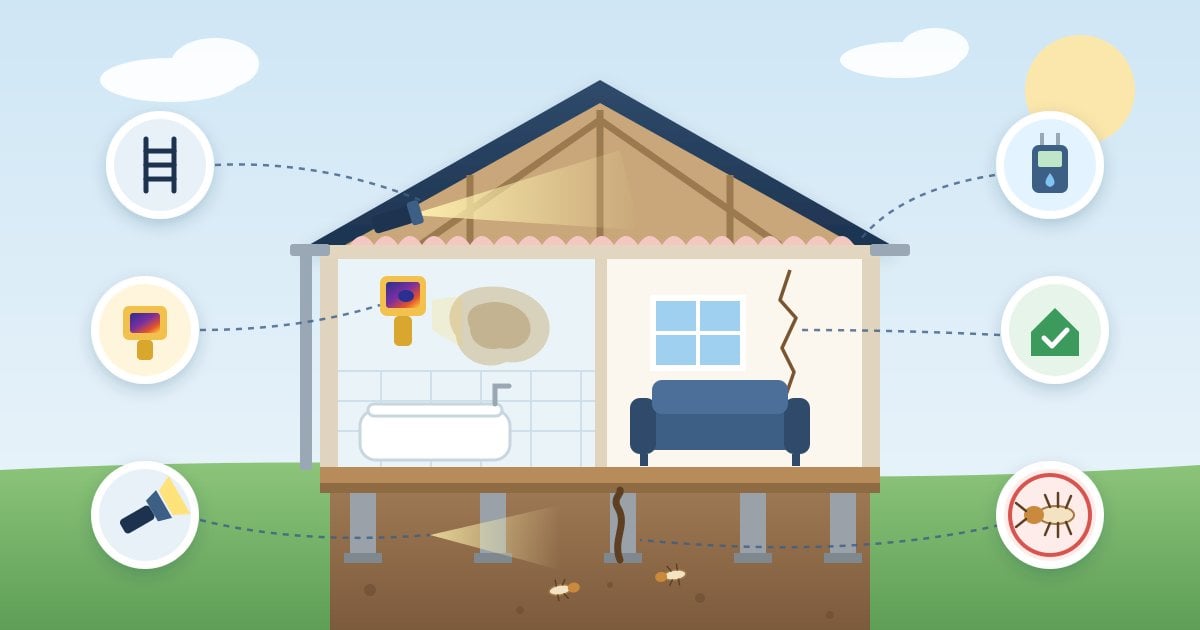
If you’re buying a home, it’s easy to focus on the kitchen, bathroom, floorplan and whether the backyard feels right. What you can’t see can be harder to judge.
A building and pest inspection gives you a closer look at the property’s visible and accessible condition before you commit to buying it. It combines a building inspection with a pest inspection, so you can find out more about potential building defects, timber pests, termite activity and other issues that may not be obvious during a normal inspection.
But what does that actually involve?
What Does a Building Inspection Cover?
The building component looks at the visible and accessible parts of the property and considers the condition of relevant building elements.
Depending on the property and what can be safely accessed, this can include:
- Internal walls, ceilings and floors
- Doors and windows
- Stairs and other visible internal elements
- Kitchens, bathrooms and other wet areas
- External walls and building surfaces
- Roof coverings where accessible
- Roof space
- Gutters, downpipes and eaves where visible and accessible
- Garages
- Decks, balconies and external structures
- Subfloor areas where accessible
The inspector is looking for visible defects, deterioration, cracking, movement, moisture-related signs, damaged building elements and other conditions that may require attention or further investigation.
This is particularly useful because a property can look great during an open home while still having problems in less obvious areas. Fresh paint or a renovated kitchen doesn’t necessarily tell you what’s happening in the roof space, underneath the house or around the external building elements.
Does the Inspection Check the Roof and Under the House?
Where safe and reasonably accessible, the inspection can include the roof space, roof coverings and subfloor.
These areas can provide useful information about the condition of the property. For example, the inspector may look for visible deterioration, signs of moisture, damaged timber, issues with roof elements or other conditions that warrant closer attention.
Access is important, though. A standard building and pest inspection is not an instruction to force entry into locked, unsafe or inaccessible areas.
If an area cannot be inspected because access is restricted, it should be identified as a limitation in the report rather than treated as though it was checked.
What Does the Pest Inspection Cover?
The pest component focuses specifically on timber pests, particularly termites and other pests that can damage timber.
The inspection may look for:
- Evidence of termite activity
- Signs of previous termite activity where identifiable
- Visible termite or timber-pest damage
- Timber deterioration
- Signs associated with timber borers
- Fungal decay where relevant
- Conditions that may contribute to timber pest activity
The inspector may also consider accessible areas around the property where conditions could be relevant to timber pests.
This distinction matters because a building inspection and a pest inspection are not the same thing. A building inspection may identify visible timber damage, but that doesn’t replace a dedicated pest assessment.
And importantly, not seeing termites during an inspection does not mean a property can be guaranteed to be completely free of concealed pest activity.
Can Thermal Imaging Find Hidden Problems?
Thermal imaging can be used as an additional inspection tool where appropriate.
Rather than simply relying on what can be seen with the naked eye, a thermal camera can identify unusual temperature patterns that may warrant further investigation. This can provide useful information when investigating potential moisture-related concerns or other unusual areas.
However, thermal imaging has limitations.
It doesn’t see through walls, and it cannot guarantee that every concealed defect, moisture issue or termite infestation will be detected. It works best as part of the wider inspection process rather than as a replacement for visual assessment.
What Doesn’t a Building and Pest Inspection Cover?
This is one of the most important things to understand before booking an inspection.
A building and pest inspection is not a guarantee that every possible problem with a property will be found. It is generally a visual, non-invasive assessment of accessible areas within the agreed inspection scope.
For example, a standard inspection does not necessarily include:
- Opening walls, ceilings or other building finishes
- Removing fixed coverings
- Complete electrical testing or certification
- A full plumbing assessment
- Asbestos testing
- Specialist structural engineering assessment
- Detailed flood-risk assessment
- Pool compliance assessment
- Testing every appliance
- Assessment of every concealed defect
If something appears to require specialist attention, the inspection report may recommend further investigation by the appropriate professional.
This doesn’t make the inspection less useful. In fact, knowing where the limits are can be just as important as knowing what was inspected.
What If an Area Can’t Be Accessed?
Properties are not always ready for an inspection.
Furniture, stored belongings, locked rooms, low roof access, restricted subfloor entry or unsafe conditions can prevent certain areas from being properly inspected.
An inspector shouldn’t simply assume that an inaccessible area is fine.
Instead, the limitation should be recorded in the report so you know exactly what was and wasn’t available for assessment. If the area is important enough to warrant further investigation, you can then arrange the appropriate access or specialist assessment.
This is especially important when you’re buying a property because you don’t want to discover after settlement that an area you assumed had been checked was never accessible.
What Will You Receive After the Inspection?
Following the inspection, you’ll receive a written report documenting the relevant findings from the assessment.
Depending on the inspection, the report may include:
- Areas inspected
- Building defects or concerns observed
- Pest and termite findings
- Photographs of relevant findings
- Inspection limitations
- Areas requiring further investigation
- Other observations relevant to the agreed inspection scope
The report gives you information about the property’s observable condition at the time of inspection.
It doesn’t decide whether you should buy the property, and it doesn’t determine what the property is worth. Those are decisions for you to make based on the inspection findings, price, contract, property research and any specialist advice you obtain.
Why Have Both Building and Pest Inspections?
The two parts answer different questions.
| Building inspection | Pest inspection |
| Looks at visible building condition | Looks for timber pests |
| Identifies visible defects | Looks for termite activity and evidence |
| Considers accessible building elements | Considers timber pest damage |
| May identify moisture-related signs | Considers conditions relevant to timber pests |
| May recommend further investigation | May recommend further pest investigation |
Having both assessments together gives a buyer a broader understanding of the property than relying on a general visual inspection during an open home.
Know What You’re Buying
A building and pest inspection isn’t about finding a reason to walk away from every property. It’s about replacing some of the guesswork with useful information.
Before you commit to a property, knowing what was inspected, what was found and whether anything needs further investigation can put you in a much better position to make your own decision.
If you’re buying a property and want to understand its visible and accessible building condition as well as potential timber pest concerns, a building and pest inspection can be an important part of your pre-purchase due diligence.
Frequently Asked Questions
Does a building and pest inspection guarantee there are no problems?
No. A standard inspection is generally visual and non-invasive and is limited to areas that are accessible and within the agreed scope. Concealed defects or inaccessible areas may require further investigation.
Should I get a building and pest inspection before buying?
For many property purchases, arranging the appropriate inspection before committing to the purchase can give you important information about the property’s condition and any issues that may need further attention.
Will the report tell me whether I should buy the property?
No. The report provides information about the findings from the inspection. The decision about whether to purchase, negotiate or proceed with the property remains yours.