Some building problems aren't obvious from a visual inspection. Thermal imaging provides a non-invasive way to identify unusual temperature patterns that may point to moisture, leaks, insulation problems, electrical issues and other building concerns.
Certified Pest & Building Inspection Services provides thermal imaging inspections and reports across Newcastle, Maitland, Hunter Valley, Port Stephens, the Central Coast and surrounding areas.
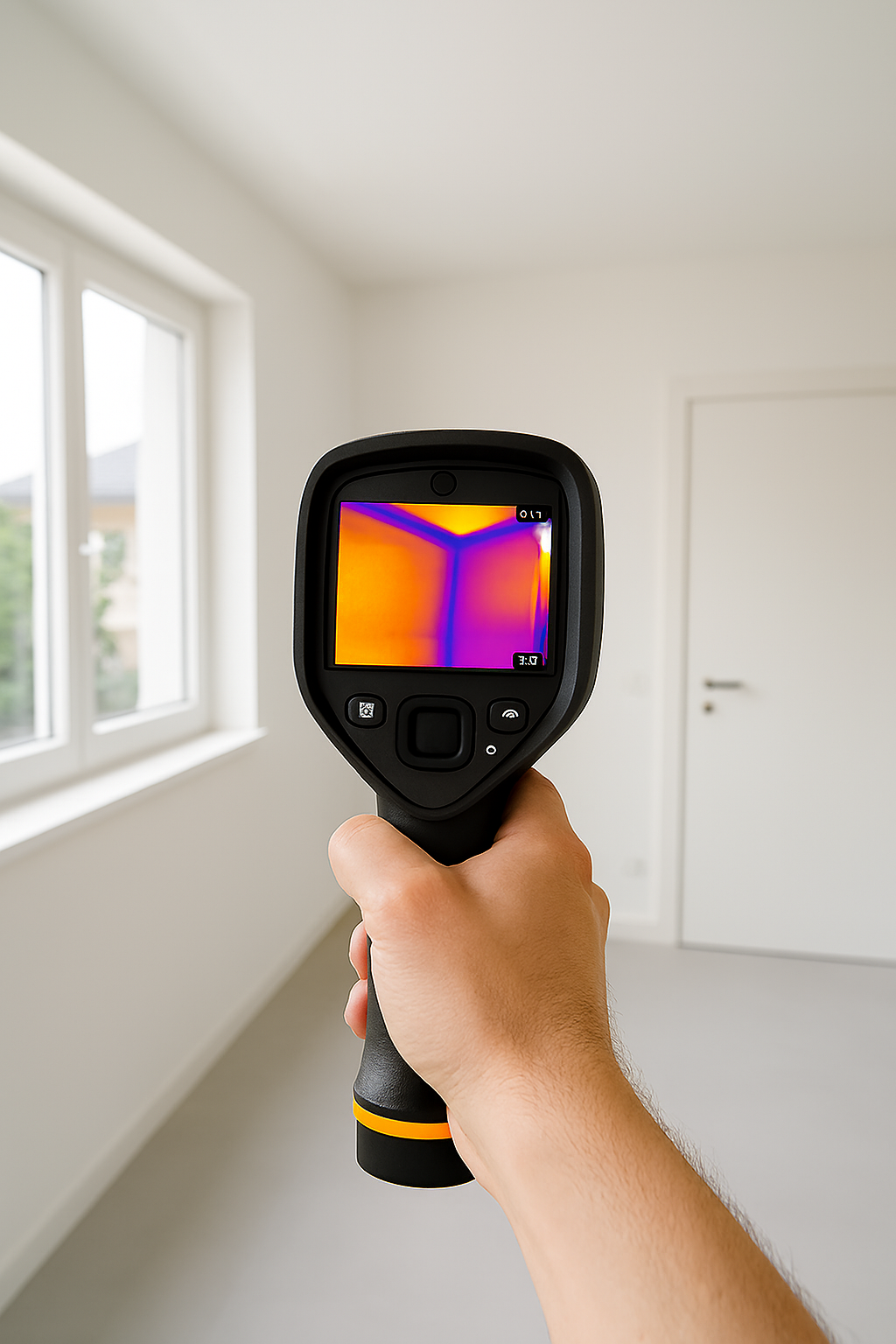
Thermal imaging uses a specialist infrared camera to identify differences in surface temperature. These temperature patterns can provide useful information about areas that may require further investigation without opening walls or damaging finished surfaces.
Thermal imaging can be particularly useful when a problem isn't readily visible, helping an inspector identify areas of concern and determine whether further investigation is warranted.
A thermal image is not a diagnosis by itself. The results need to be interpreted alongside the building's materials, conditions and other inspection findings.
Thermal imaging can help identify temperature anomalies associated with a range of building and property concerns.
Thermal imaging can help locate areas with unusual temperature patterns that may indicate moisture or water-related problems, including:
Differences in temperature across walls and ceilings can sometimes highlight:
Electrical components that are operating abnormally can produce unusual heat patterns. Thermal imaging can help identify areas that may require further electrical investigation.
Thermal imaging can also assist with investigations for termite activity by identifying unusual temperature patterns that may warrant closer examination.
We can combine thermal imaging with other inspection methods to investigate suspected termite risk areas rather than relying on a thermal image alone.
Thermal imaging is one of several tools we can use when investigating difficult-to-identify building and pest concerns.
To identify areas with elevated moisture levels and help locate conditions that may increase the risk of timber pest activity.
To assist with examining difficult-to-access areas where a direct visual inspection isn't practical.
To identify unusual temperature patterns that may indicate areas requiring further investigation.
Using these tools together can provide a clearer picture of what's happening within and around the property.
A thermal camera doesn't diagnose a building problem on its own.
Temperature patterns can be affected by the building materials, surface composition, weather conditions, heat sources, ventilation and other environmental factors. Correct interpretation requires an understanding of both the equipment and the property being inspected.
We use high-end thermal imaging equipment and apply our building and pest inspection knowledge when interpreting thermal images. Where an unusual pattern is identified, we consider the surrounding conditions and other inspection findings before determining whether further investigation is appropriate.
One of the key advantages of thermal imaging is that it can provide additional information without cutting into walls, removing finishes or otherwise damaging the property.
This makes it useful when investigating potential moisture, insulation, pest or building concerns where the source of the problem isn't immediately visible.
Our thermal imaging services are available across:
We service surrounding suburbs and areas throughout the region.
If you're concerned about moisture, leaks, insulation, termites or another building issue that isn't easy to see, contact us to discuss whether thermal imaging is suitable for your property.
Book an Inspection Online ↗Thermal imaging can identify unusual temperature patterns that may be associated with moisture, leaks, missing insulation, electrical heat, building defects and some pest-related concerns. Further investigation may be needed to determine the underlying cause.
It can help identify temperature patterns associated with moisture and potential leaks, including some roof, plumbing and shower-related issues. Thermal imaging alone does not confirm the source of a leak, so additional investigation may be required.
Thermal imaging can assist in identifying unusual temperature patterns that may warrant further investigation for termite activity. It should be used alongside other pest inspection methods rather than as a standalone termite diagnosis.
Yes. Thermal imaging is a non-invasive inspection method and does not require walls, ceilings or other finished surfaces to be opened to obtain a thermal image.
No. Thermal imaging is a diagnostic tool that can provide additional information during an inspection. It doesn't replace a comprehensive building inspection or specialist testing where required.
Arrange a thermal imaging inspection to identify non-visible moisture, insulation, or building concerns.